Getting around Houston comes down to one honest fact: this is a car city, and it is huge. The metro area sprawls out in every direction like somebody spilled it, and the stuff you want to see sits miles apart. Good news is the freeways are wide, the feeder roads catch you when you miss an exit, and once you figure out the Loop, the whole map starts making sense. Here is how a local would do it.
The short answer: car or rideshare
Plan on driving or leaning on rideshare apps for almost everything. Public transit works for a few specific corridors (more on the rail line below), but a trip that strings together Montrose, the Galleria, Chinatown out on Bellaire Boulevard and a barbecue spot in the suburbs is a car trip. Walking between neighborhoods is not really a thing here.
If you are staying a few days and want to roam, rent a car. If you are parking yourself in one neighborhood and taking a couple of rides a day, rideshare is the move. Pick your base with that in mind; our guide to where to stay in Houston breaks down which areas let you keep your rides short.
IAH vs Hobby: which Houston airport
George Bush Intercontinental (IAH)
The big one. It sits well north of the city, so figure roughly 30 to 45 minutes to the Inner Loop with clear roads, and a lot longer at rush hour. This is where the international flights and the widest choice of routes live.
William P. Hobby (HOU)
Closer to downtown, smaller, quicker to get in and out of. It is heavily a Southwest Airlines airport. If your flight options are close, Hobby wins for convenience, and it puts you nearer to EaDo, Third Ward and the road to Galveston.
Our take: if a nonstop works into Hobby, take it. Coming from overseas or connecting through a big network, IAH is your door and that is fine, just budget the drive in.
Getting from the airports into town
Both airports have designated rideshare pickup areas, follow the signs once you have your bags. Rental cars usually mean a shuttle ride to the rental facility first. METRO runs bus service connecting both airports to the city, and it is an option if you are traveling light and in no hurry, but most visitors will find a car or a ride far easier with luggage and Houston humidity in the mix.
Why you need a car here
Three reasons. First, sprawl. Houston covers a ridiculous amount of ground, and the good stuff is scattered across all of it. Second, no zoning. Houston famously never adopted traditional zoning, so a taqueria, a townhouse block, a tire shop and an art gallery can share one street. Fun and weird, but there is no tidy walkable core. Third, the heat. From late spring into fall, walking any real distance at midday is a sweaty negotiation.
Rideshare vs rental: the honest take
Rideshare is great if you are staying Inner Loop and your plans are mostly Montrose, the Heights, Midtown and the Museum District. No parking stress, no navigating feeder roads at night, nobody has to be the driver after a long dinner. It gets expensive and slow once you are crossing town repeatedly.
A rental makes sense the moment your list includes Chinatown, NASA out at Clear Lake, a Galveston day, or a barbecue pilgrimage. Plenty of visitors split it: rideshare for nights out, rental for daytime roaming.
METRORail and where it actually helps
The METRORail Red Line is the useful one for visitors. It runs from Downtown through Midtown, the Museum District and the Texas Medical Center down to the NRG Park area. That corridor happens to hold a lot of what visitors want: museums, Hermann Park, Midtown bars, and game days or rodeo season at NRG. Riding the train to a Texans game or the rodeo instead of fighting the parking lots is a genuinely smart call.
Outside that line, rail will not get you far. The other lines serve the East End and the area near Third Ward and the University of Houston, which helps if you are staying right there.
Houston freeways explained for visitors
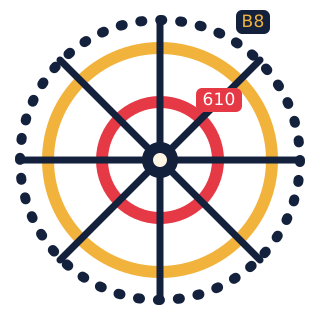
Houston is built like a wagon wheel. Rings go around, spokes go out. Learn these and you can navigate without staring at your phone the whole time.
The rings
- The 610 Loop. The inner ring. "Inside the Loop" or "Inner Loop" means the older, denser core: Downtown, Montrose, the Heights, Midtown, the Museum District, Third Ward, EaDo. The Galleria sits right along the west side of 610.
- Beltway 8. The next ring out, where the main lanes are the Sam Houston Tollway. The frontage roads are free, the main lanes are not.
- The Grand Parkway. The far outer ring through the suburbs, also tolled. Most visitors never touch it.
The spokes
- I-10, the Katy Freeway heading west (it is enormous, and it is still busy), and the East Freeway heading out the other side.
- I-45 splits into the Gulf Freeway running south toward Clear Lake and Galveston, and the North Freeway running up toward IAH country.
- US 59 / I-69, the Southwest Freeway, cuts southwest past Montrose and on toward Chinatown territory. Locals still just call it 59.
- 288 runs south from downtown past the Medical Center, and it has tolled express lanes in the middle.
Tolls and toll tags
Houston toll roads are largely cashless, which means a camera or a toll tag handles it. If you drive a rental, the rental company has a toll program that bills you afterward, usually with a fee on top. Ask at the counter how theirs works, and decide whether to use it or to set your map app to avoid tolls.
Local tip: Feeder roads (what other states call frontage roads) run alongside almost every freeway. Missed your exit? Get off at the next one, take the feeder, and use the Texas U-turn, a dedicated lane that lets you flip back the other way under the freeway without sitting through a light. It is the single most Houston thing about driving here and it will save you constantly.
The quirks nobody warns you about
Left exits happen, so watch the overhead signs early. Merging culture is assertive: people will close the gap, so signal, commit and match speed. Exits come up fast after entrances, which means lots of weaving in a short stretch. Rush hour runs roughly early morning to mid-morning and again from mid-afternoon into the evening, and a rainstorm makes all of it worse.
And construction is permanent. Somewhere, a freeway is being widened, rebuilt or reshuffled, and lanes shift without much ceremony. Trust your map app's live traffic over your memory.
Parking in Houston
Downtown runs on garages and surface lots, with metered street parking scattered around; most meters take apps. In Montrose, the Galleria, Rice Village and the busier stretches of the Heights, valet is everywhere, even at casual spots, because lots are tiny. Just roll with it.
Read every sign. Houston towing is real and fast, especially at private lots attached to businesses and in residential pockets with permit rules. A strip-center lot that looks empty at night can still be tow-away for anyone not shopping there.
Real talk: Never park in a lot because "everyone else is." Check for the tow sign, check the hours on it, and if it says customers only, it means it. Getting your car back from an impound lot across town is the worst way to spend a Saturday.
Weather driving and flooding
Houston floods. Heavy rain can turn streets and especially freeway underpasses into deep water in a hurry. The rule every local learns: turn around, do not drown. Never drive into water when you cannot see the road surface, and treat underpasses as the danger spots they are, because water collects there first and gets deeper than it looks. When a real storm rolls through, wait it out somewhere dry.
Heads up: If storms are in the forecast, check your route and favor streets that do not dip under a freeway. Our Houston by season guide covers hurricane season and the rainy stretches.
Biking and walking
Walk within a neighborhood, not between them. Montrose, the Heights, Midtown, Rice Village and parts of downtown are pleasant on foot, especially in the mild winter months.
For a ride, the Buffalo Bayou trails are the best stretch of green in the city, running west from downtown along the bayou with skyline views, and the Heights has a long rail-trail popular with runners and cyclists. Houston's old docked bike share program shut down, so do not plan your trip around grabbing a public bike. If you want to ride, look into a rental from a local bike shop. Whatever you do, go early or near sunset in summer, carry water and respect the heat.
Galveston trip logistics
Galveston is the easy beach escape. Take I-45 south (the Gulf Freeway) the whole way, roughly an hour without traffic, longer on summer weekends. You will pass Clear Lake on the way, which is where Space Center Houston sits if you want to stack NASA onto the day. Leave early on a weekend, come back before the evening crush, and do not rely on rideshare for the return trip, since rides back from the island can be scarce. This one really is a rental-car day. More ideas for day plans live in our guide to things to do in Houston.
Flying and keeping it simple
One quick, calm note: do not bring cannabis on a plane or across state lines, and keep your trip simple. Texas law is its own thing, and our page on whether Houston is 420-friendly explains it without the drama.
Worth the drive
Once you have wheels and a feel for the Loop, Houston opens up. Viet-Cajun crawfish out on Bellaire, the east side taco truck, the late-night kolache run, all reachable. Plan your eating with our Houston munchies guide and route around it. That is how locals do it.